
Technical audit of a business application
Before investing in development or a system rewrite, first understand its real condition. The audit will show technical risks, operational weaknesses, modernization options and recommended next steps.
When an audit makes sense
Poor documentation
For example, the application may be important, but no one knows exactly how it works or where the risks are.
Unavailable vendor
The original developer or agency is no longer available, but you need to develop the system further.
Planned investment
Before upgrading or rewriting, you first need to know what really makes sense.
Slow system
The application is unstable, slow or expensive for every further modification.
Quality verification
You want to verify the work of an existing vendor and get an independent perspective.
Regaining control
In this case, you need to restore control over code, access, data and operations.
What we check
Architecture
Module boundaries, dependencies, critical points and development options.
Code quality
Readability, duplication, technical debt, tests and documentation.
Database and performance
Data design, indexes, queries, data growth and migration risks.
Security
Authentication, permissions, sensitive data, vulnerable dependencies.
Infrastructure
Hosting, cloud, CI/CD, monitoring, backups and sensitive configuration data.
Integration
APIs, data flows, error states, manual interventions and duplicate data.
Data flows and performance
In addition, we will check slow queries, indexes, database load, ETL processes and critical data links.
Access rights and audit trail
We will also check permissions, roles, sensitive data and the traceability of important actions in the system.
Tests and deployment
We will verify the status of automated tests, the build process, CI/CD and the risks associated with deploying changes.
Audit output
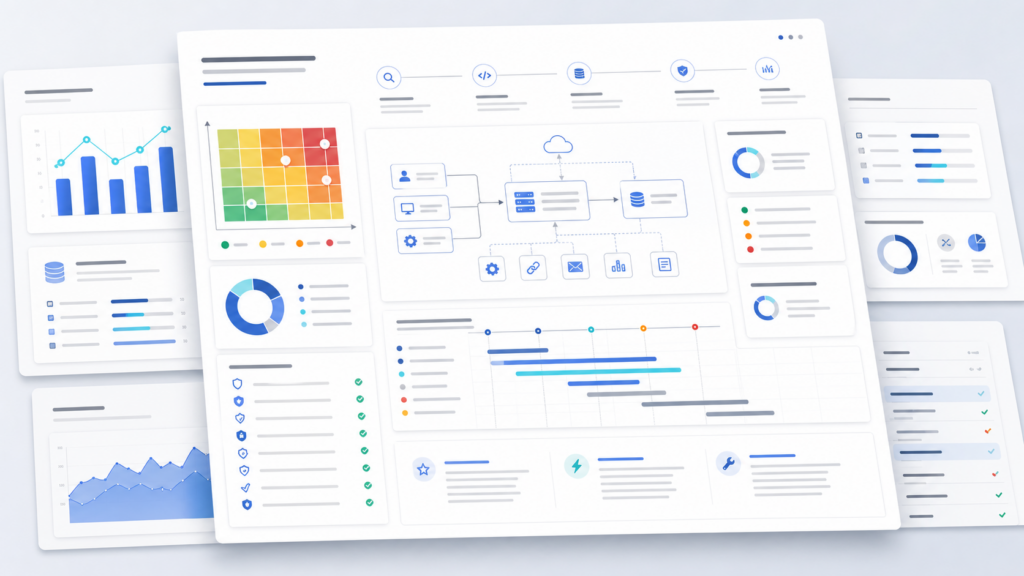
After the audit, you will receive a clear technical and management report: system condition, main risks, priorities, recommended next steps and the design of the first realistic stage.
- Description of current system status
- Identification of major technical risks
- Overview of operational and security weaknesses
- Priority recommendations
- Recommended short-term stabilization steps
- Modernization roadmap
- Recommendations on whether to repair, modernize or replace the system
- First realistic stage estimate
What may follow
Stabilization
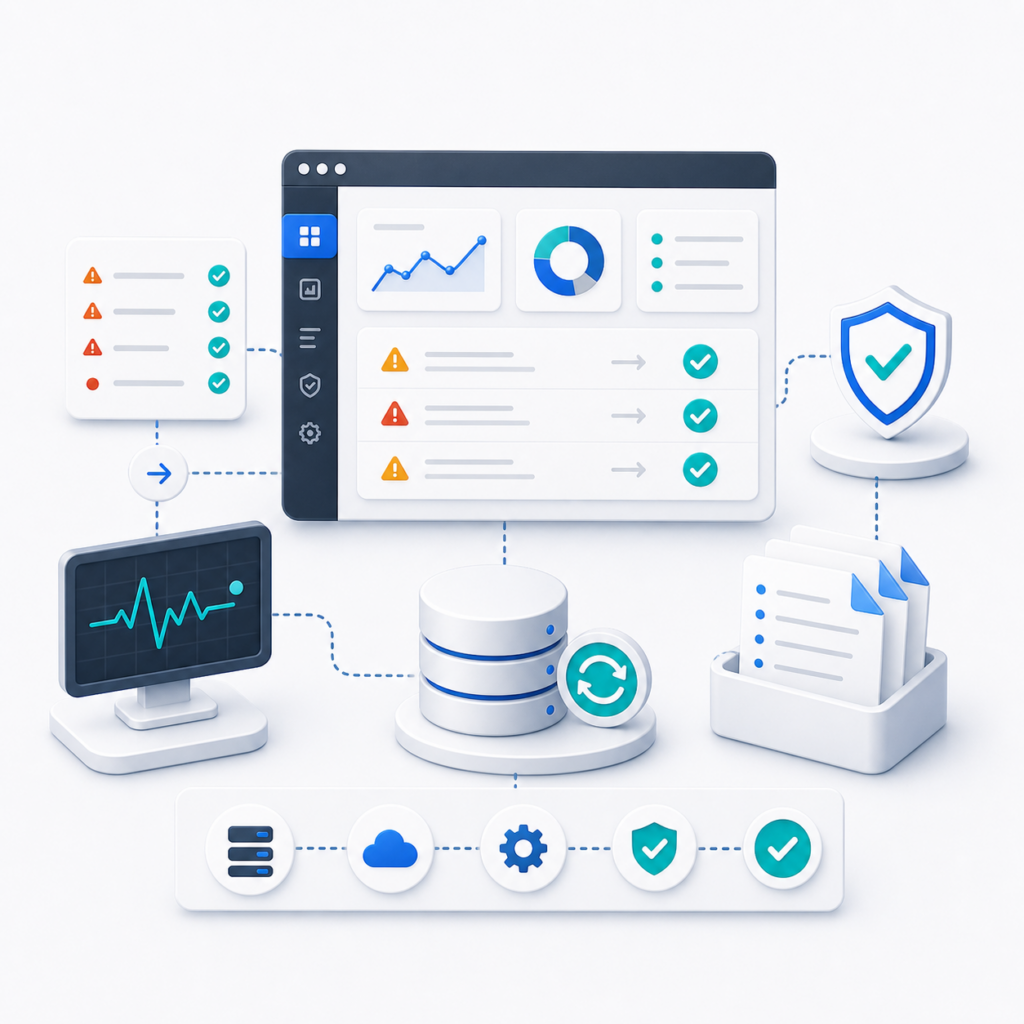
First, we can remove critical points, set up monitoring, prepare backups and complete documentation.
Modernization
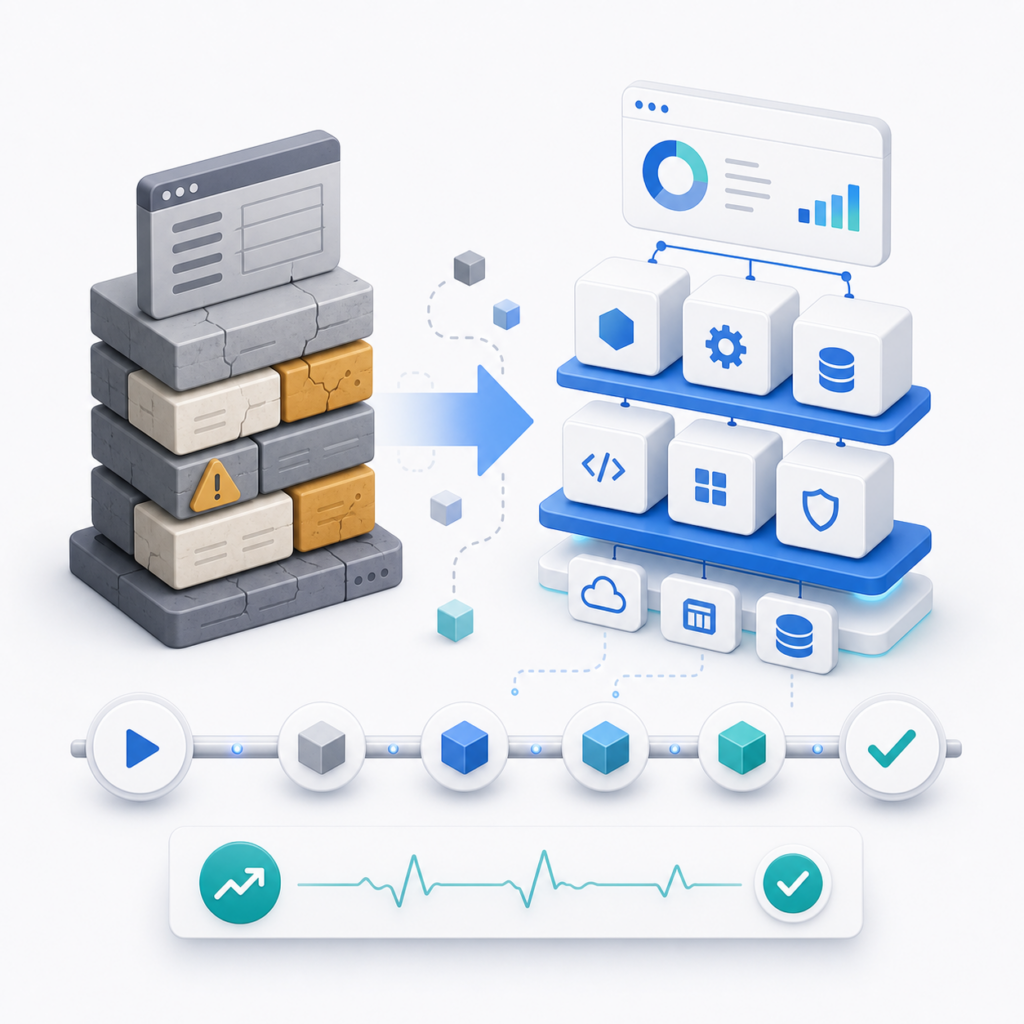
Then, we can gradually reduce risk without stopping operation.
Technical management
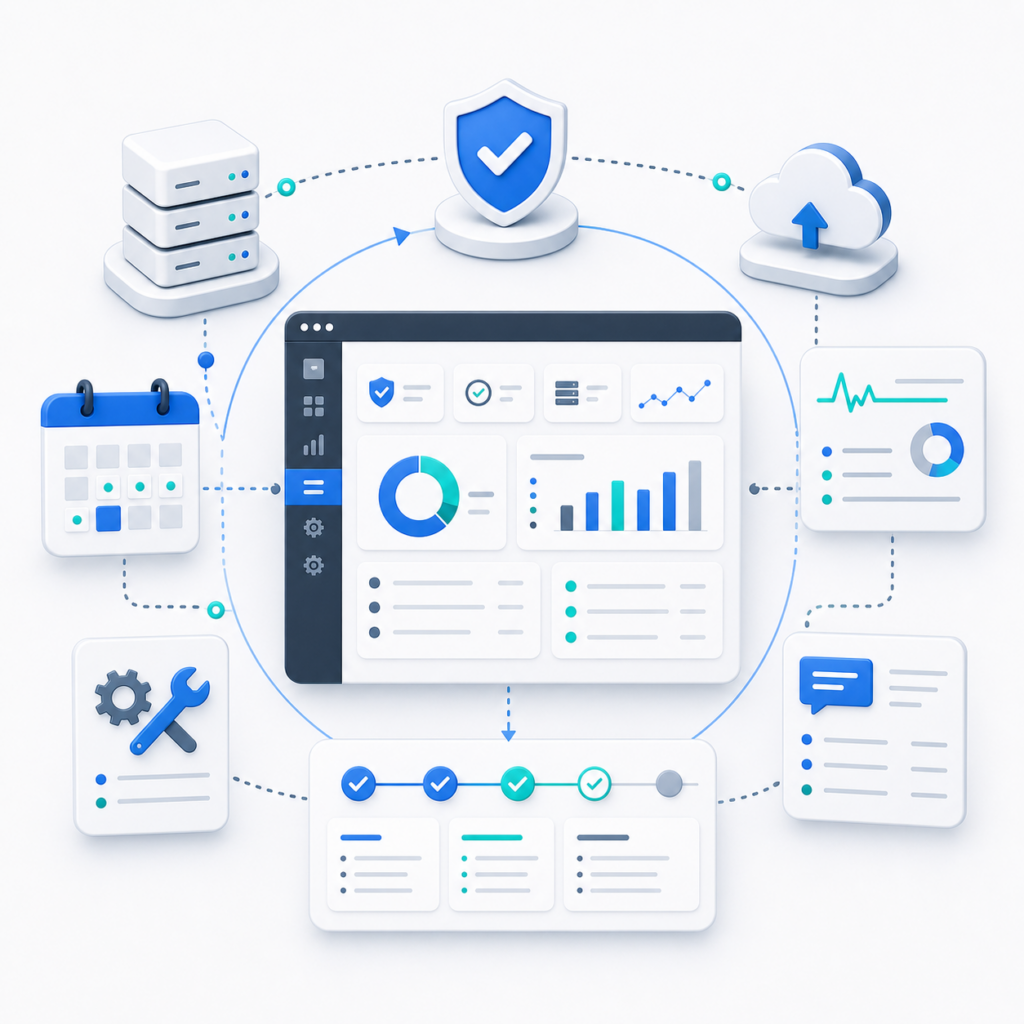
Finally, we can provide long-term development, technical ownership and operational assurance for the system.
Start making decisions based on the current state of your system
A technical audit will show risks, priorities and the most appropriate next step.