
Management is not always sure whether an existing system should be fixed, rewritten, or simply stabilized. For company leadership, this is usually not just a technical issue. It affects operational reliability, costs, the speed of future changes, and the ability to keep developing the business without unnecessary risk. In practice, this topic is often addressed only after something goes wrong: an application outage, the departure of a key person, an unreliable integration, a slow system, rising cloud costs, or new pressure around AI and security. It is better to identify the problem earlier, understand its real cause, and define the first step that will have a clear business impact.
Why it matters for the company
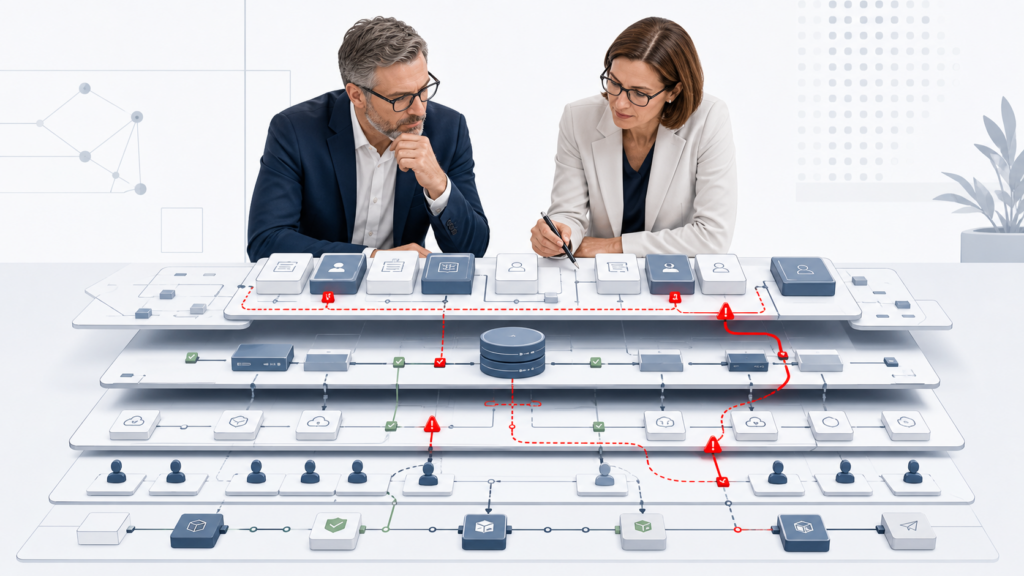
A technical audit is not only about technology. The important part is to understand how the application affects operations, customers, data, security, and the speed of future development. Only then does it make sense to propose a technical solution. When the problem is postponed, it usually grows. New features take longer, people start bypassing the system manually, data becomes inconsistent, and suppliers are afraid to touch older parts of the application. The company then pays not only for development, but also for inefficiency, delays, and operational uncertainty.
The most common mistake: solving the symptom instead of the cause
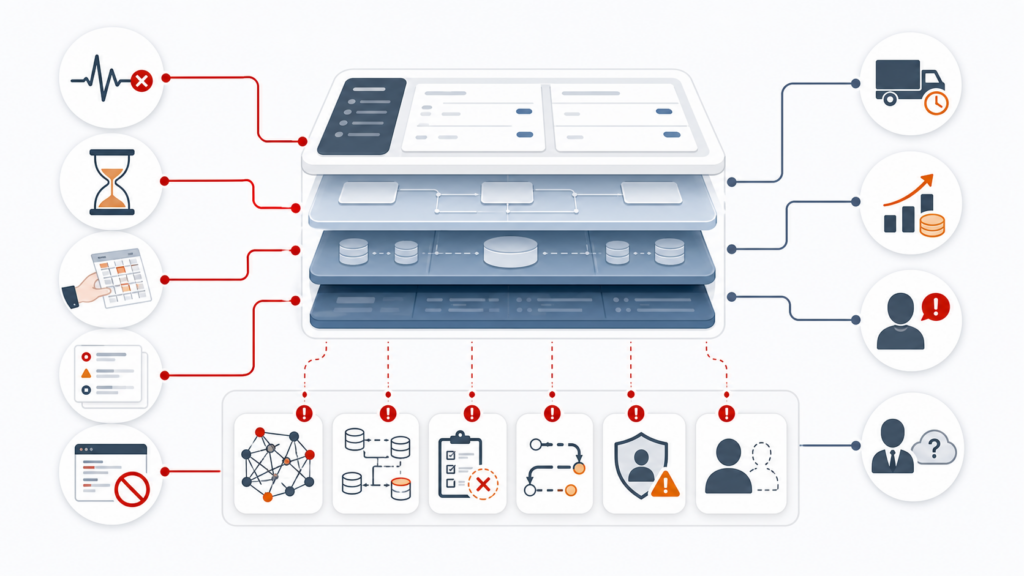
When a company starts discussing a technical audit of a business application, quick suggestions often appear: buy a new tool, rewrite part of the system, hire another developer, or add another integration. Sometimes that is the right direction, but without a technical assessment it may only become an expensive fix for a visible symptom. The real cause may be somewhere else: in the architecture, unclear data flows, missing tests, a weak deployment process, poorly configured permissions, or the fact that nobody has overall technical responsibility for the system.
How to approach it in practice
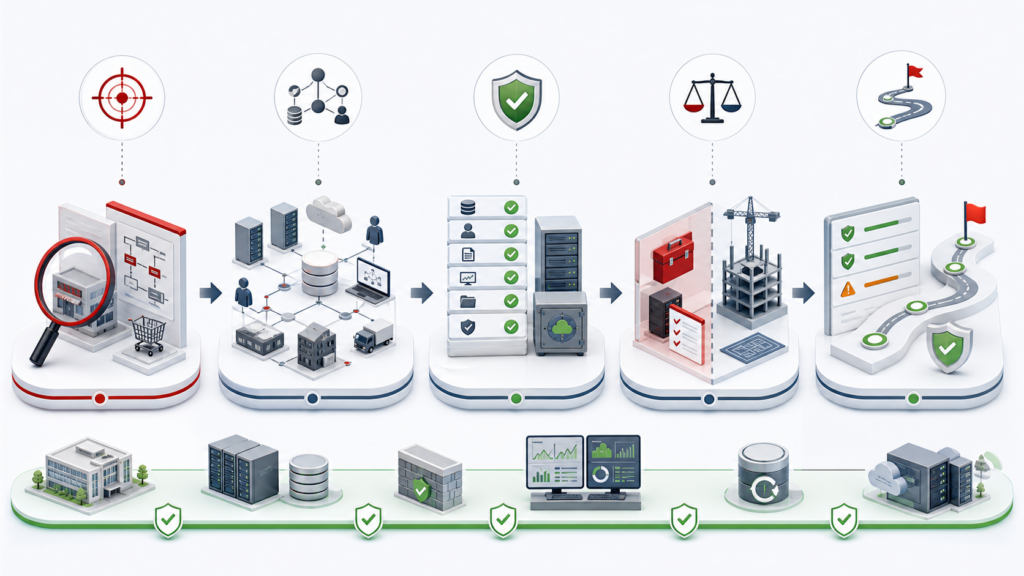
- First, describe which process or business outcome is affected by the problem.
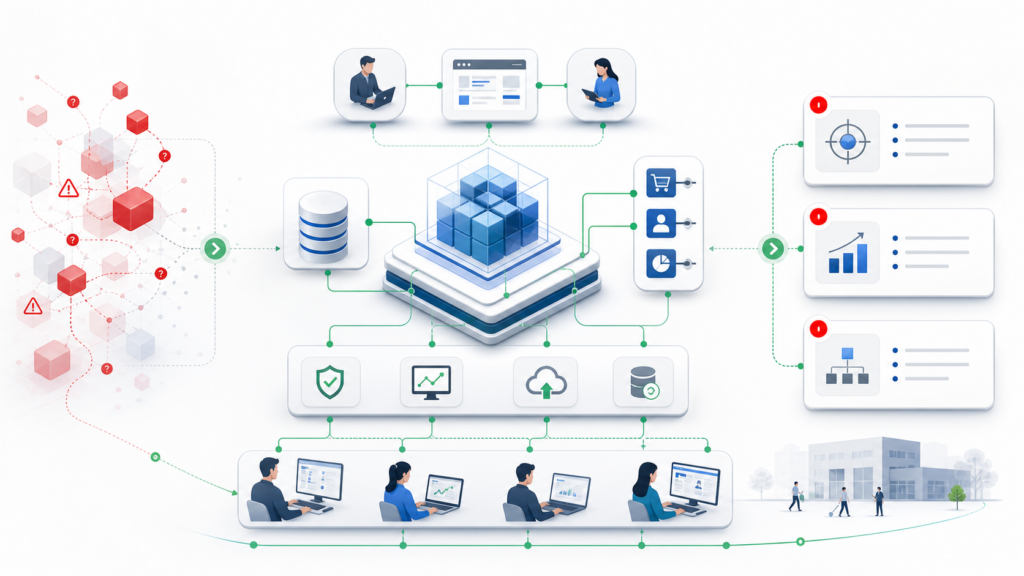
- Map the systems, data, users, integrations, and suppliers connected to the issue.
- Verify the operational minimum: backups, access rights, logs, monitoring, documentation, and security.
- Separate quick stabilization steps from larger modernization work.
- Design the first phase so that it has a measurable outcome and does not put daily operations at risk.
This approach turns a general problem into a decision that can be managed. Leadership sees the business impact, the technical team knows where to start, and the budget is tied to a specific result.
How GoveSoft can help
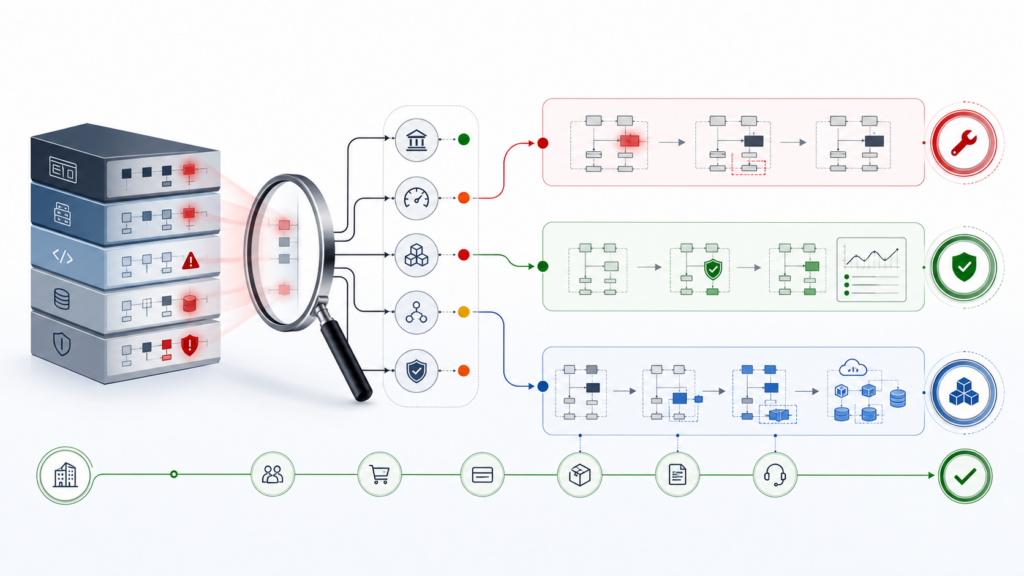
GoveSoft helps companies take over and stabilize applications, modernize legacy systems, design integrations, use AI over company data, improve DevOps and monitoring, work with databases, strengthen security, and provide long-term technical management. For unknown or risky systems, the best first step is often a technical audit. It shows the current state, the main risks, weak points in operations, modernization options, and a realistic proposal for the first phase. If the problem is already clear, the next step may be a stabilization sprint, integration work, an AI pilot, modernization of a selected part of the system, or long-term technical management. The solution must not be designed in isolation from the reality of the company. It has to take into account operations, people, data, security, ERP or CRM dependencies, the available budget, and how maintainable the system will be in one year and in five years.
The first step for company leadership
If your company is dealing with a technical audit of a business application, do not start by buying a tool or launching a large rewrite. Start with a short technical assessment: what is the real problem, what impact does it have, what can be fixed quickly, and which next step makes sense both economically and technically. GoveSoft can review the current state with you and recommend whether the right next step is a consultation, technical audit, stabilization, integration, AI pilot, or the first phase of modernization. The result should be simple: less uncertainty, less manual work, more reliable operations, and a clear direction for further development.